Find the control gaps in your critical finance spreadsheets.
Keep Excel where it works. Add read-only preservation, formula checks, ownership, controlled AI review, and an evidence trail around the files that drive close, pricing, risk, fees, and reporting.
No workbook upload is required to use the checklist or book the first assessment call.
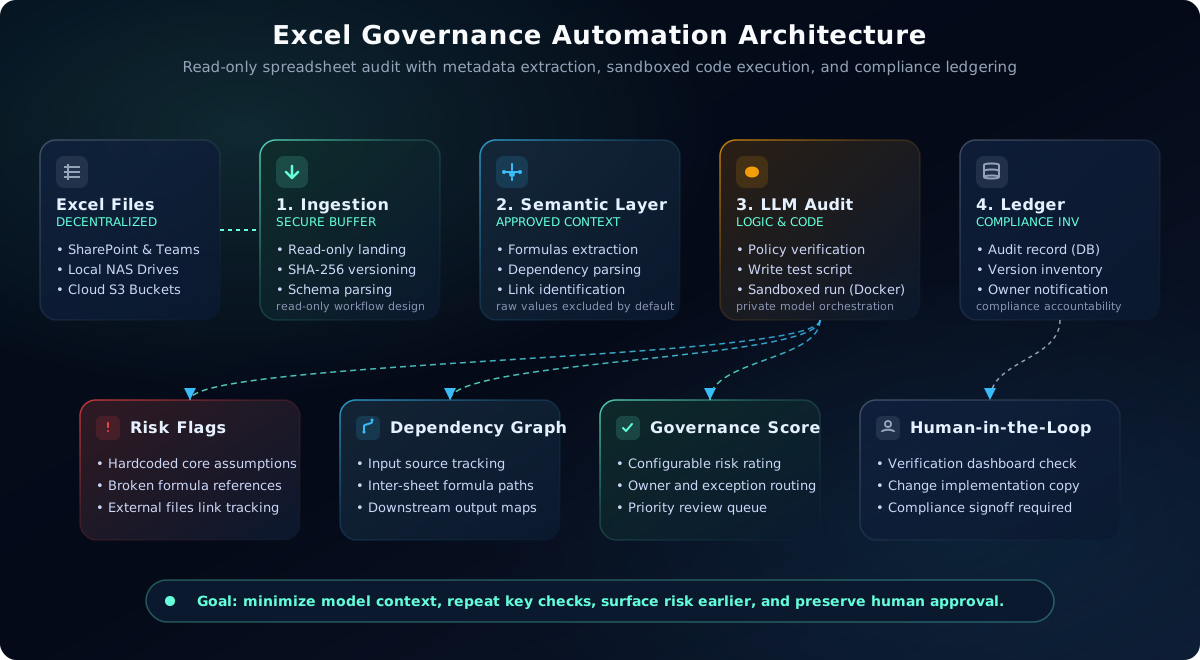
Reference architecture. A real engagement is scoped to the organization's policies, systems, workbook risks, and approved model boundary.
Excel often behaves like a production system without production controls.
Replacing every workbook can be slow and disruptive. A governance layer starts by making changes, dependencies, ownership, and exceptions visible while leaving the source file untouched.
What the checklist gives you
- Twelve control areas written for finance, risk, audit, and technology stakeholders
- A simple 0-2 self-rating for prioritization, not a certification score
- Evidence examples to request for each control
- A 30-day action plan template for the highest-priority gaps
- A clear boundary between model reasoning and deterministic validation
A practical first review, not another AI maturity score.
Use the checklist to find evidence gaps, assign owners, and decide which controls need a deeper assessment.
Business ownership and materiality
Read-only preservation and file hashing
Version and change history
Formula integrity and drift checks
External links and dependencies
Macros, hidden sheets, and named ranges
Deterministic validation and reconciliations
Access control and sensitive-data boundaries
AI scope and context minimization
Sandboxed code execution
Risk scoring and human approval thresholds
Evidence, alerts, exceptions, and periodic review
A controlled AI boundary
Raw rows do not need to enter a model by default. The model can review approved formulas, metadata, structure, and policy context, while deterministic code handles calculations and reconciliations inside a constrained sandbox.
What this is not
The checklist is not an audit opinion, regulatory certification, legal advice, or evidence that a workbook is correct.
It is a structured way to identify missing controls and prepare a focused technical and operational assessment.
Start with evidence, then decide what to automate.
Download the checklist for an internal review, or bring one representative workflow to a LetuxTech assessment. No workbook upload is required for the first conversation.