Offline AI security camera with computer vision and local RAG
Smart cameras are useful, but private spaces do not need to become cloud-model inputs by default. This deployment was configured to process the camera workflow and approved context locally, then use a local model to evaluate configured risk patterns.
May 6, 2026Computer VisionLocal RAGOn-premise model
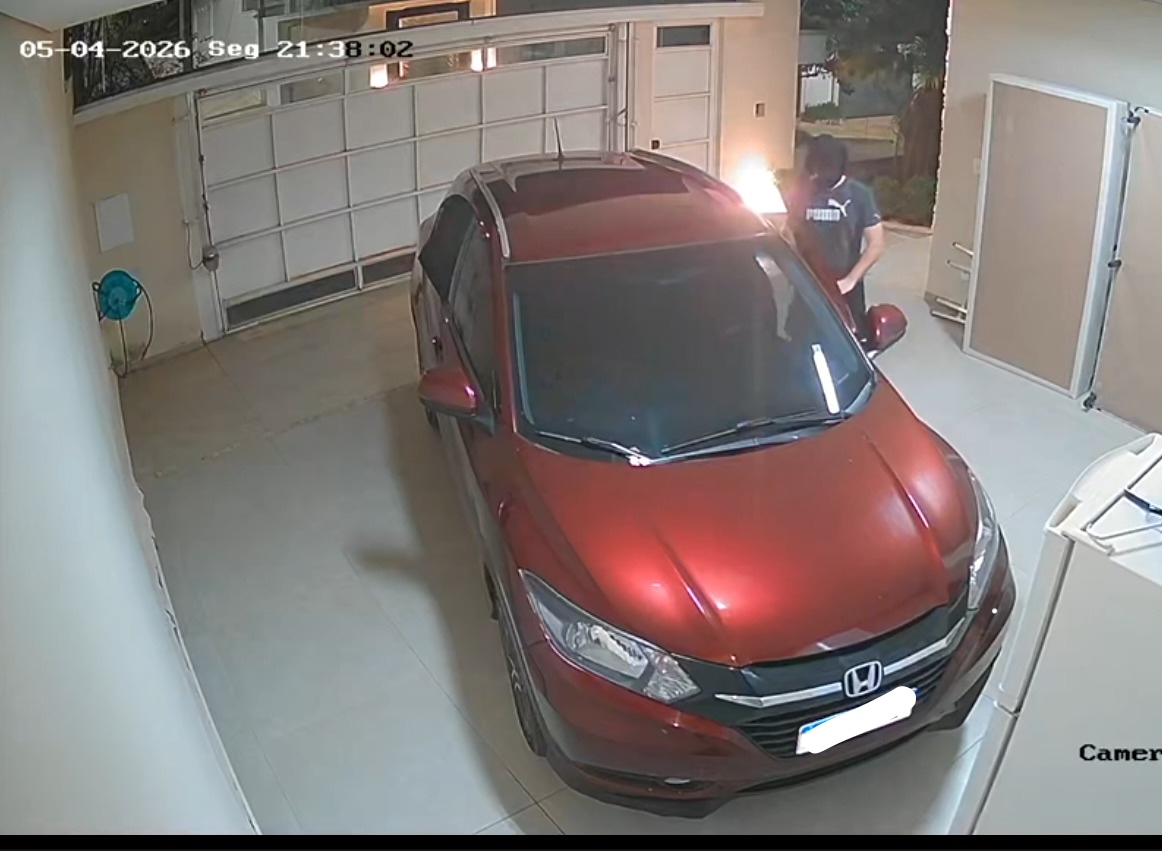
Published frame from the anonymized deployment. License plates and identifying details in the image and examples are hidden or changed for privacy.
Why we built this
Privacy should not be the price of better security. A home, office, warehouse, or clinic can need smart monitoring without sending every frame to an outside API.
LetuxTech implemented an offline, context-aware AI security workflow using edge processing and local RAG. The goal was to evaluate a camera frame, retrieve authorized private context, and choose the configured alert path without depending on a cloud-model connection.
How it works: vision plus RAG plus open weights
Most people hear RAG and think about chatting with PDFs. We applied the same idea to computer vision.
First, a fast local computer vision step reads details from the frame — vehicle type, license plate, face status, location. Then the system queries a local database for resident profiles and known vehicles. That is the RAG step.
After that, the system sends the camera frame and the retrieved context to a local open-weight model. The model does more than detect objects. It reasons about the full situation.
The deployment uses dedicated local hardware tailored to the client's environment. LetuxTech handles model selection, quantization, infrastructure sizing, and ongoing tuning against the agreed privacy, quality, and cost requirements.
Illustrative workload model: assuming about 1,300 input tokens per check and one check per minute, the workload totals 56.16 million input tokens over 30 days. This arithmetic is a sizing example, not a measured deployment result or savings claim. API cost depends on the selected model and token mix; local deployment adds hardware, power, maintenance, and support costs that must be compared for the target environment.
Vision
Read each frame and extract signals: vehicle type, plate, face status, and location.
Local RAG
Query private context from local data — resident profiles, known vehicles, schedules.
Local model
An on-premise model reasons about the full scene and returns a clear, actionable risk decision.
Real-world validation: two contexts, same risky image
During controlled deployment validation - not a live security incident - we tested a high-risk garage scenario. The person's face was intentionally hidden so the identity signal would not match. The model received two different local RAG contexts.
All license plates below are changed for privacy.
Scenario 1: known car, hidden face
The local database says the red Honda with plate LTX4P26 belongs to the resident. But the person in the garage has an obfuscated face and does not match the resident profile.
{
  "alert_level": "RED",
  "biometric_status": "obfuscated",
  "context_validation": "The vehicle matches the resident database. Vehicle: Red Honda, Plate LTX4P26. But the person's appearance does not match the known resident profile.",
  "threat_analysis": "Extreme threat detected. A person with a covered face is inside a private garage. Even if the car matches, hiding identity inside the house is a strong risk signal. The car may have been stolen, or the home may have been breached.",
  "recommended_action": "Sound the house alarm, notify local law enforcement, and send a high-priority emergency alert to the homeowner."
}
The key point is that the system did not stop at "known car, all good." It saw a known car and a hidden face inside a private garage. That is still a serious threat.
Scenario 2: wrong car, hidden face
In the second test, the local database says the resident owns a silver car with plate QRA7M18. The camera frame shows a red Honda with plate LTX4P26. The person's face is still hidden.
{
  "alert_level": "RED",
  "biometric_status": "obfuscated",
  "context_validation": "Critical mismatch. The RAG system says the resident vehicle is a silver car, Plate QRA7M18. The image shows a red Honda, Plate LTX4P26.",
  "threat_analysis": "A masked person is interacting with a vehicle that does not belong to the resident. This points to a home invasion or vehicle theft in progress.",
  "recommended_action": "Keep the alarm in high-priority mode, notify police immediately, and send emergency push notifications to the homeowner."
}
This time the system has two strong signals: an unknown vehicle and a masked person. The alert stays red.
Why this matters
The garage example is easy to understand, but the same pattern can be evaluated in other contexts: factories analyzing private production footage, clinics processing sensitive patient data, or logistics teams monitoring restricted areas. A local design can keep specified processing within the client-controlled boundary when its network, storage, and access controls are configured and verified for that requirement.
Privacy boundary
The workflow is designed to keep camera frames, prompts, retrieved records, and inference inside the client-controlled local environment.
Context-aware reasoning
The local model evaluates the camera event together with authorized context retrieved from the private database.
Action
Outputs trigger alarms, push alerts, tickets, or human review steps automatically.
What we learned
Open-weight models, local RAG, and controlled pipelines can support an operational decision path on client-managed hardware. That removes per-call model API charges for this workflow while adding hardware and operating costs, and it allows the data boundary to be configured around the client's requirements.
The deployment documentation describes an operating system that continues to be tuned. Accuracy, latency, uptime, false-positive rate, incident prevention, and ROI are not claimed because no public benchmark is available for them.
Need a private AI workflow? Talk to LetuxTech.
LetuxTech designs, deploys, and maintains local and private AI systems for workflows whose approved data and inference boundary must remain client-controlled.
We handle the full stack: model selection, hardware sizing, RAG pipeline design, prompt engineering, integration with your existing systems, and ongoing optimization. The architecture keeps the agreed data boundary explicit, limits dependence on any one model provider, and avoids making public API calls the default path for sensitive workloads.
We begin with the workflow, constraints, evaluation plan, and operating owner before selecting the model or hardware.